


UTAH CRIMINAL DEFENSE ATTORNEY
Facing Serious Assault Charges in Utah?
What You Do Next Matters
Utah Aggravated Assault Defense Attorney
Defense Against Felony Aggravated Assault Charges in Utah
Few criminal allegations escalate as quickly as an accusation of aggravated assault. What may begin as a brief confrontation, a rapidly developing dispute, a defensive reaction, or a few seconds of panic can quickly lead to felony charges that carry severe legal consequences. An aggravated assault allegation can threaten a person’s freedom, reputation, employment opportunities, firearm rights, and future. In cases filed in Davis County, Weber County, Salt Lake County, or Utah County, the defense often depends on the first reports, witness credibility, medical evidence, video footage, whether a weapon was actually used, and whether prosecutors can prove the required mental state beyond a reasonable doubt.
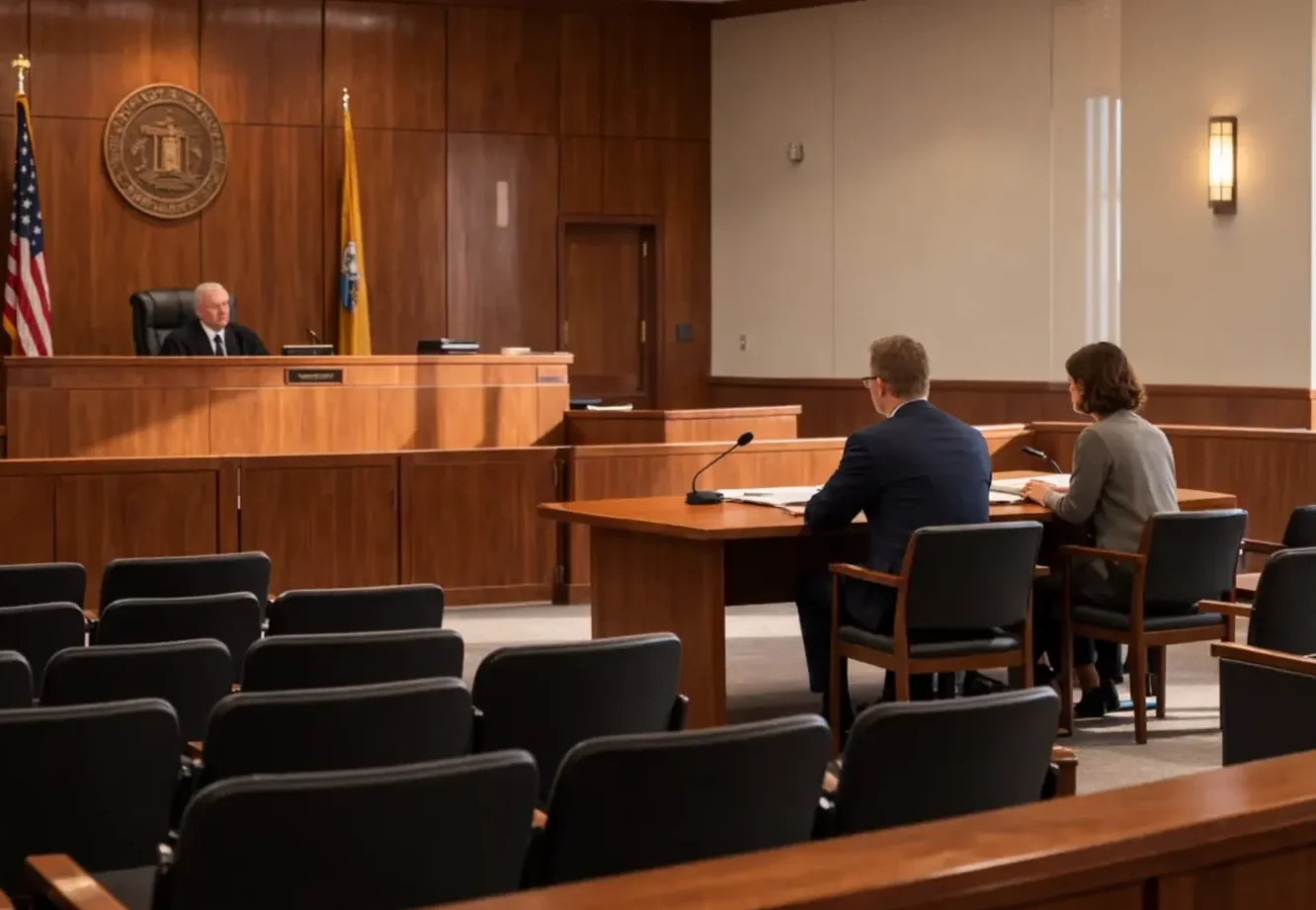
These cases often arise from chaotic and emotionally charged situations where witnesses may have different perspectives and where events unfold in a matter of seconds. Law enforcement officers typically arrive after the confrontation has already occurred and must rely on statements, physical evidence, and sometimes incomplete information to determine what happened. Those early decisions can shape the entire course of the criminal case.
Aggravated assault investigations frequently involve interviews with witnesses, review of surveillance footage, medical reports, and forensic evidence. Prosecutors may rely heavily on these materials when deciding whether to file felony charges. Once charges are filed, the potential consequences can include prison exposure, permanent criminal records, and significant long term personal and professional consequences.
Andrew McAdams is a Utah criminal defense attorney and former prosecutor who represents individuals accused of serious criminal offenses throughout Northern Utah. His experience handling felony prosecutions provides insight into how these cases are investigated and how prosecutors evaluate evidence.
McAdams Law PLLC represents individuals facing aggravated assault charges in courts throughout Northern Utah, including Salt Lake County, Davis County, Weber County, Utah County, Tooele County, Summit County, Box Elder County, and Cache County.
When someone is facing a serious felony allegation, early legal representation can play an important role in protecting constitutional rights and developing a defense strategy designed to challenge the state’s case.
Utah Law Governing Aggravated Assault
Aggravated assault in Utah is defined under Utah Code Section 76-5-103. The statute generally involves allegations that a person committed an assault and either caused serious bodily injury or used a dangerous weapon during the incident.
Prosecutors must prove each element of the offense beyond a reasonable doubt in order to obtain a conviction. This includes establishing the circumstances of the alleged confrontation, the nature of any injuries, and whether a weapon was involved.
Because aggravated assault cases often arise from fast-moving and chaotic events, disputes about what actually occurred are common. Witness testimony, medical evidence, 911 calls, body camera footage, photographs, and video recordings may all play a role in determining whether the elements of the statute can be proven. The defense should examine the full sequence of events, including who escalated the confrontation, whether the accused acted defensively, whether the alleged injuries meet the legal standard, and whether the State is charging a serious felony based on an incomplete or one-sided account.
Understanding Aggravated Assault Charges Under Utah Law
Utah law recognizes aggravated assault as a more serious form of assault that typically involves allegations of serious bodily injury or the use of a dangerous weapon. Prosecutors often pursue aggravated assault charges when they believe the alleged conduct created a substantial risk of serious harm.
Aggravated assault cases frequently involve disputed facts. Witnesses may disagree about how a confrontation began, what actions were taken during the incident, and whether a weapon was involved. In many cases the evidence consists primarily of witness statements, partial video recordings, or medical reports that may require careful interpretation.
Because these cases often involve conflicting accounts of events, a thorough review of the available evidence is essential in evaluating the strength of the prosecution’s case.
Potential Penalties for Aggravated Assault in Utah
Aggravated assault charges are typically prosecuted as felony offenses in Utah. The level of the offense often depends on the severity of the alleged injuries and the circumstances surrounding the incident.
Second degree felony aggravated assault
Allegations involving serious bodily injury or the use of a dangerous weapon may be prosecuted as a second degree felony. Convictions at this level can carry significant prison exposure and long lasting legal consequences.
Third degree felony aggravated assault
In some situations prosecutors may pursue a third degree felony when the alleged conduct involves a dangerous weapon but the injuries are less severe.
Felony convictions can affect far more than the immediate criminal case. A permanent felony record can influence employment opportunities, housing applications, professional licensing, firearm rights, and many other aspects of a person’s life.
Because of these potential consequences, individuals facing aggravated assault allegations often benefit from obtaining experienced criminal defense representation as early as possible.
Difference Between Assault and Aggravated Assault in Utah
Utah law distinguishes between simple assault and aggravated assault. While both offenses involve allegations of harmful or threatening conduct, aggravated assault involves additional factors that increase the seriousness of the charge.
Simple assault generally involves allegations that a person attempted to cause bodily injury, threatened another person with violence, or created a substantial risk of physical harm.
Aggravated assault typically involves additional elements that elevate the severity of the allegation such as:
Use of a dangerous weapon
Allegations of serious bodily injury
Conduct that prosecutors believe created a substantial risk of severe harm
In some cases the distinction between these two offenses becomes an important issue in the defense of the case. Careful analysis of the evidence may reveal that the facts do not support the more serious aggravated assault charge.

Situations That Commonly Lead to Aggravated Assault Allegations
Aggravated assault cases can arise from many different types of confrontations. These incidents often occur quickly and may involve heightened emotions, confusion, or conflicting perceptions about what occurred. These incidents may arise from:
Bar or nightclub altercations
Domestic disputes that escalate into physical confrontation
Road rage incidents
Arguments involving alleged weapons
Situations where a person claims self defense or defense of others
Because these incidents often develop rapidly, witnesses may have very different recollections of what occurred. Video evidence may capture only a portion of the events, and police officers must frequently make decisions based on incomplete information.
These factors can create important issues that must be carefully examined when developing a defense strategy.
Overlapping Violent Crime Allegations
Aggravated assault cases in Utah rarely stand alone, and many individuals facing these charges are also dealing with related allegations depending on how the incident unfolded. What begins as a confrontation may quickly escalate into charges involving assault, domestic violence, or even threats of violence based on statements or actions during the encounter. In some situations, prosecutors may also pursue charges such as use of a dangerous weapon, discharge of a firearm, or possession of a weapon by a restricted person if a weapon was involved. These cases often fall within the broader category of violent crimes and homicide where multiple overlapping allegations are common.
It is also not unusual for law enforcement to investigate whether the situation involved reckless endangerment, disorderly conduct, or obstruction of justice if there are claims that someone interfered with the investigation or attempted to leave the scene. In cases involving serious injury, allegations may expand to include mayhem or attempted homicide depending on the severity of the harm and the evidence available. If the incident occurred in a domestic setting, issues related to protective orders or domestic violence in the presence of a child may also arise.
Because these situations often involve multiple legal issues and competing narratives, it is important to carefully evaluate how each allegation fits within the broader case and develop a defense strategy that addresses the full scope of potential exposure.
Defense Strategies in Aggravated Assault Cases
Every aggravated assault case presents unique factual and legal issues. Defense strategy often focuses on carefully reviewing the evidence and determining whether the prosecution can prove the required elements of the offense beyond a reasonable doubt.
Potential defense strategies may include challenging the credibility of witness statements, examining whether the alleged weapon meets the legal definition of a dangerous weapon, and evaluating whether the injuries described by the prosecution meet the legal definition of serious bodily injury.

Other cases may involve claims of self defense or defense of others. Utah law recognizes that individuals may use reasonable force to protect themselves or another person from imminent harm. Determining whether a confrontation involved lawful self defense requires careful analysis of the facts and circumstances surrounding the incident.
In some situations defense counsel may also examine whether law enforcement investigators overlooked evidence or relied on incomplete information when making charging decisions.
Criminal Defense Representation Throughout Northern Utah
Aggravated assault cases are often built from conflicting accounts of a fast-moving confrontation. One witness may describe an attack. Another may describe mutual combat, panic, defense of another person, or a response to an immediate threat. McAdams Law represents clients in aggravated assault and related violent felony cases throughout Northern Utah, with a focus on the evidence that actually proves or disproves serious bodily injury, use of a dangerous weapon, intent, self defense, and the credibility of the accusation.

In Davis County communities such as Bountiful, Layton, Farmington, Clearfield, Kaysville, and nearby areas, aggravated assault allegations may arise from domestic calls, road rage incidents, parking lot disputes, bar confrontations, neighborhood arguments, or weapon-related accusations. The defense should examine how the confrontation started, whether police considered both sides, whether video or body camera footage exists, and whether the State can prove felony-level conduct rather than a lesser offense or justified use of force.
In Weber County matters connected to Ogden, Roy, Riverdale, South Ogden, North Ogden, and surrounding communities, aggravated assault investigations may involve medical records, witness statements, firearm allegations, knife allegations, surveillance video, or claims that a vehicle or object was used as a dangerous weapon. These cases require careful review of whether the alleged weapon was actually used in a way likely to cause serious injury and whether the alleged victim’s account is consistent with the physical evidence.
In Salt Lake County cities such as West Jordan, Salt Lake City, Sandy, Draper, West Valley City, Murray, South Jordan, and Taylorsville, higher case volume and larger investigative agencies can lead to extensive reports, multiple witness interviews, and quick felony screening decisions. The defense may need to move early to preserve surveillance footage, locate independent witnesses, challenge exaggerated injury claims, and address release conditions that may affect work, housing, family contact, or firearm possession.
In Utah County communities such as Provo, Lehi, Orem, American Fork, Spanish Fork, Springville, and nearby areas, aggravated assault allegations may arise from student settings, domestic conflicts, public confrontations, vehicle incidents, or disputes where witnesses describe the same event very differently. The defense should evaluate whether the evidence supports aggravated assault, whether the facts better fit simple assault or another lesser offense, and whether self defense or defense of others changes the legal analysis.
Cases in Summit County, Box Elder County, Cache County, Tooele County, and other Northern Utah counties may involve different local procedures, different court calendars, and different law enforcement agencies. In city-based cases from Sandy, video evidence, business surveillance, traffic footage, medical documentation, and witness timing may become especially important when prosecutors are deciding whether to treat the case as a serious violent felony. Wherever the case is filed, the defense should focus on the actual evidence, the statutory elements, the credibility of the witnesses, and whether the State can prove the aggravated assault charge beyond a reasonable doubt.
Frequently Asked Questions About Aggravated Assault Charges in Utah
What should I do if I am accused of aggravated assault in Utah?
You should treat the accusation as serious immediately. Aggravated assault is usually charged as a felony, and early decisions can affect the entire case. Avoid contacting the alleged victim or witnesses, avoid posting about the incident online, preserve any messages, photos, videos, dash cam footage, or witness information, and be careful about making statements to police. Many aggravated assault cases turn on seconds of disputed conduct, so evidence can disappear quickly. Early legal guidance can help protect your rights, preserve favorable evidence, and prevent statements that may later be used against you.
What is the difference between assault and aggravated assault?
Simple assault generally involves allegations of attempted injury, actual bodily injury, threats of violence, or conduct creating a substantial risk of injury. Aggravated assault is more serious because prosecutors claim additional facts, usually serious bodily injury, use of a dangerous weapon, or conduct that created a substantial risk of serious harm. The distinction matters because aggravated assault is typically prosecuted as a felony and can carry far more serious consequences. In some cases, the defense may argue that the facts do not support aggravated assault and that the case has been overcharged.
Can aggravated assault charges be reduced in Utah?
Yes, depending on the evidence. A reduction may be possible if the injuries do not meet the required legal standard, if the alleged weapon was not used as prosecutors claim, if witness statements are inconsistent, if video contradicts the police report, or if self defense or defense of others applies. Some cases may be reduced to simple assault or another lesser offense. Others may be challenged more aggressively if the evidence does not support the charge at all. The key is a careful review of the actual facts, not just the label placed on the case.
Will an aggravated assault charge automatically lead to prison?
No. A felony aggravated assault charge does not automatically mean prison, but prison exposure is a serious risk depending on the level of the charge, the alleged injuries, the person’s history, the presence of a weapon, and the prosecutor’s view of the case. Outcomes may range from dismissal or reduction to probation, jail, treatment conditions, or prison. The defense strategy should focus on weakening the State’s theory, preserving mitigating evidence, addressing risk concerns, and preparing the case as though trial may be necessary.
How serious is a felony aggravated assault conviction?
A felony aggravated assault conviction can affect much more than the immediate sentence. It can create a permanent felony record, restrict firearm rights, affect employment, professional licensing, housing, immigration status, education, military opportunities, and future background checks. If the case involves a domestic relationship, it may also create no contact orders, family consequences, and firearm restrictions. Because of those consequences, the defense should evaluate whether the State can prove the felony-level allegation and whether a lesser resolution is possible.
Can self defense apply to an aggravated assault charge?
Yes. Utah law allows a person to use reasonable force to protect themselves or another person under certain circumstances. In aggravated assault cases, self defense may apply when the accused reasonably believed force was necessary to prevent unlawful force, serious bodily injury, or another immediate threat. The analysis depends on what the accused knew, saw, and reasonably believed at the moment force was used. A strong self defense claim may require witness review, body camera footage, injury evidence, 911 calls, photographs, video, and careful reconstruction of how the confrontation developed.
What evidence is commonly used in aggravated assault cases?
Aggravated assault cases often involve witness statements, 911 calls, body camera footage, medical records, photographs, surveillance video, phone videos, forensic evidence, firearm evidence, weapon evidence, vehicle damage, and police reports. The defense should look beyond the summary in the probable cause statement. Witnesses may be biased, frightened, intoxicated, mistaken, or missing key parts of the event. Medical records may not prove what prosecutors claim. Video may show only the final moments rather than what caused the confrontation. The strongest defense often begins by reconstructing the full event.
What counts as a dangerous weapon in an aggravated assault case?
A dangerous weapon may include an object that is inherently dangerous, such as a firearm or knife, but prosecutors may also argue that ordinary objects became dangerous based on how they were allegedly used. A vehicle, bottle, tool, bat, or other object may become part of the aggravated assault theory if the State claims it was used in a way capable of causing serious bodily injury. The defense should examine whether the object was actually used as a weapon, whether the alleged victim faced an immediate threat, and whether the evidence supports the prosecution’s characterization.
Can a vehicle be considered a dangerous weapon?
Yes, depending on the facts. Prosecutors may argue that a vehicle was used as a dangerous weapon if it was allegedly driven toward another person, used to block, strike, intimidate, or create a substantial risk of serious injury. These cases often arise in road rage, parking lot, domestic, or pursuit-related incidents. The defense should evaluate the driving pattern, distance, speed, road conditions, witness accounts, video evidence, and whether the accused was trying to flee danger rather than threaten someone. Vehicle-based aggravated assault allegations often require careful reconstruction.
Do aggravated assault cases go to trial?
Some aggravated assault cases go to trial, while others are resolved through dismissal, reduction, plea negotiation, diversion-like outcomes where available, or sentencing agreements. Whether trial is necessary depends on the evidence, the prosecutor, the risks of conviction, the client’s goals, and the available defenses. Because aggravated assault is a serious felony, the case should be prepared with trial readiness from the beginning. Trial preparation can improve negotiation leverage and help expose weaknesses in the State’s case.
Can aggravated assault charges affect employment or professional licensing?
Yes. A felony aggravated assault charge or conviction can create employment problems, professional licensing concerns, security clearance issues, housing problems, immigration consequences, and firearm restrictions. Even before conviction, pending felony charges may affect work, reputation, and family stability. For professionals, business owners, students, military members, and people who rely on clean background checks, the collateral consequences may be just as important as the courtroom outcome.
Can aggravated assault be charged with other offenses?
Yes. Aggravated assault cases often overlap with other allegations, including domestic violence charges, weapons offenses, threats, disorderly conduct, reckless endangerment, criminal mischief, obstruction, witness tampering, or attempted homicide. If the case involves a firearm, prosecutors may also consider restricted person allegations or discharge-related charges. If the incident occurred in front of a child or in a domestic setting, additional consequences may follow. The defense should evaluate the full case, not just the aggravated assault count.
Should I speak with police if I am accused of aggravated assault?
You should be careful before making any statement. People often want to explain that they acted in self defense, that the other person started it, or that the police misunderstood the situation. Those facts may matter, but a rushed statement can create inconsistencies or admissions that prosecutors use later. Before answering questions, it is usually safer to understand the accusation, the evidence, and whether speaking would help or hurt. This is especially important in a serious criminal investigation where prosecutors may already be evaluating felony charges.
Explore More Information About Violent Crime Charges
Violent crime allegations can arise in many different ways, and the specific charge involved often depends on the nature of the conduct, whether a weapon was involved, the seriousness of the alleged injury, and the surrounding circumstances of the investigation. Some cases involve allegations of threats or minor physical confrontations, while others involve accusations of robbery, firearm offenses, or homicide-related conduct.
If you would like to learn more about related violent crime charges, you can explore the pages below for additional information about specific types of allegations and how these situations commonly arise.
Assault and Domestic Violence Offenses
Abuse Offenses
Robbery and Kidnapping Offenses
Homicide Offenses
Firearm Related Offenses
Public Disorder Offenses
You may also return to the main Violent Crimes page for a broader overview of how violent offenses are investigated and prosecuted in Utah.